How Drug Detox Connects to Intensive Outpatient Programming
When people speak about recovery, they frequently speak about a single moment, the choice to stop utilizing, the first day of treatment, the day somebody leaves a center. In practice, healing seldom works that way. It is generally a sequence of linked steps, and each step has a various job.
That distinction matters when discussing drug detox and intensive outpatient programming. Drug detoxing is designed to help a person make it through the immediate physical and emotional pressure that features stopping compound usage. Extensive outpatient programs, often called IOP, serves a different function. It helps an individual continue treatment while living more independently than they would in inpatient care. One stage handles intense stabilization. The other assistances ongoing structure, skill-building, and accountability.
At Recreate Behavioral Health of Ohio in Gahanna, near Columbus, that connection is built into the method care is provided. The center specifies that it provides clinically supervised detoxing for alcohol and drug dependency, consisting of inpatient medical detox, which treatment continues along a wider continuum of care that can consist of domestic inpatient treatment, extensive outpatient shows, outpatient care, and peer support. That matters because the gap between stopping a substance and finding out how to live without it is where lots of people struggle most.
Detox is the initial step, not the whole treatment plan
Families frequently call a detox program in a state of seriousness. Someone has been using heavily, they hesitate of withdrawal, and they want aid instantly. That seriousness is genuine. Detox can be necessary. But it helps to be clear about what detox does and what it does not do.
Drug detox addresses the short-term crisis. At Recreate Behavioral Health of Ohio, the detox process is referred to as clinically monitored around the clock, with tracking of essential indications, medications to reduce withdrawal symptoms, nutrition and hydration assistance, and psychological support. The normal detox duration is about 5 to 10 days, depending on the substance.
That time window informs you something crucial. A couple of days might suffice to start physical stabilization, but it is not typically sufficient time to reconstruct routines, address activates, repair judgment, or practice coping skills in real life. Individuals might feel physically much safer after drug detoxification, however that does not imply they are prepared to navigate work tension, relationship strain, old using environments, or the psychological crash that frequently follows early abstinence.
This is where many misconstrue the role of detox. They presume the hardest part is over once withdrawal ends. In some cases the opposite holds true. Once the body is no longer in immediate crisis, the individual needs to handle everything that was waiting beneath, yearnings, tension, embarassment, practices, seclusion, and the large uncertainty of what comes next.
That is why a detox program works best when it links directly to additional treatment rather than standing alone.
Why the handoff matters so much
A tidy transition from one level of care to another is not simply a scheduling concern. It can form whether an individual remains participated in treatment at all.
Recreate Behavioral Health of Ohio says its detox and rehab services are offered in one center, permitting patients to transition from detox into domestic treatment without altering places or groups. Even when a person does stagnate into residential care, that very same concept still matters. Less interruptions typically make treatment easier to continue. When people do not need to begin over with brand-new staff, brand-new routines, and a new setting all at once, they typically have a better chance of staying connected to care.
That continuity becomes especially relevant when the next step is intensive outpatient programming. IOP asks more of the patient than detox does. In detox, medical and medical personnel bring much of the load since the individual remains in a susceptible withdrawal stage. In IOP, the patient starts carrying more duty. They have to attend regularly, participate, follow through, and apply treatment outside the program hours. The smoother the shift, the better.
A useful example helps. Picture a person who goes into detox after continual opioid or fentanyl use. Throughout detox, they get medical guidance, sign management, and emotional assistance. They may start to feel more steady after numerous days. At that point, stability is still delicate. If they leave with no immediate structure, the go back to regular life can hit hard. If rather they step into the next level of care within the same continuum, there is less dead space between crisis care and healing work.
That dead space can be dangerous. Motivation tends to be greatest throughout and right away after a crisis. Delays, confusion, and fragmented planning can erode that motivation fast.
Intensive outpatient shows does a various kind of work
IOP is frequently misconstrued because it sits in between more obvious classifications. It is not detox, and it is not the same as complete domestic treatment. It is likewise more structured than regular outpatient check outs. Its value lies in that middle ground.
Recreate states that its continuum of care can include extensive outpatient programs. The key word here is extensive. The individual is no longer in the brief withdrawal window that defines drug detoxing, but they still need significant treatment contact. They might need a firm schedule, clinical support, and peer connection while starting to function in day-to-day life.
That difference in setting modifications the work of treatment. Detox is interested in helping an individual securely stop using and support. IOP is where many people begin practicing healing in real time. They are not merely discussing tension in theory. They may be dealing with a difficult shift at work, dispute in the house, transport problems, or the emotional disappointment that typically follows an intense treatment entry. If treatment is going to hold, it needs to be strong enough to meet those everyday realities.
In a well-connected continuum, IOP constructs on what detox began. The person does not need to retell the entire story from scratch. The group currently understands the compound involved, the withdrawal course, the early reaction to treatment, and whether medication-assisted treatment was part of the withdrawal management strategy. Recreate specifically notes treatment for alcohol, opioids, and fentanyl in detox, in addition to withdrawal management and medication-assisted treatment. That info matters throughout the next phase due to the fact that early healing preparation ought to show what happened during detox, not disregard it.
The connection is medical, psychological, and logistical
When treatment specialists discuss continuity of care, it can sound abstract. For patients and households, it is normally far more concrete.
Clinically, the connection matters since detox reveals instant requirements. Some people need a greater level of support after withdrawal. Others may be suitable for extensive outpatient programming when supported. The point is not that everybody follows the same course. The point is that the course ought to be decided within a continuum instead of by uncertainty after discharge.
Emotionally, detox can leave individuals raw. Even when the acute phase has actually passed, they may feel exposed, ashamed, exhausted, or unsure of themselves. A familiar treatment environment can reduce some of that pressure. If the exact same company provides several levels of care, clients do not feel like they are vanishing into a various system just when they are attempting to stay grounded.
Logistically, easy barriers matter more than many people anticipate. Altering locations, repeating admissions documents, navigating insurance concerns once again, or waiting too long between services can all become drop-off points. Recreate notes that it accepts most major insurance strategies and uses insurance verification help. That sort of assistance might sound administrative, however in actual treatment circulation it can make the next step occur faster and with less confusion.
In treatment, small frictions build up. So do little conveniences. An individual fresh out of drug detox is hardly ever in the best position to solve a complex transition on their own.
Not everyone moves from detox directly to IOP
This is one of the most essential subtleties in the conversation. The connection between drug detox and intensive outpatient programming is real, however it is not constantly instant or direct.
Recreate's continuum consists of several possible next actions: residential inpatient treatment, intensive outpatient shows, outpatient care, and peer support. That informs you the program is not treating every person as if they require the exact same placement. Some patients leave detox requiring the greater structure of residential care. Others may be stable adequate to go into IOP. Others may move into basic outpatient services at a different point in treatment.
That is a healthy sign. Excellent treatment preparation is not about forcing everyone into the same lane. It has to do with matching the level of care to the individual's condition and situations at that stage.
A common household concern is whether an enjoyed one can "just do outpatient" after detox. Often that might be possible. Sometimes it is not the strongest choice. The answer depends on the person's stability, support group, treatment engagement, and ability to function safely and regularly outside a more regulated setting. The validated realities here do not provide a universal rule, and genuine treatment rarely does either.
What can be stated with confidence is that detox alone is frequently too narrow to serve as a complete response. If the facility offering detox likewise provides a continuum that consists of IOP, property treatment, outpatient care, and peer assistance, that creates space for more individualized decisions.
What clients and households must expect during the transition
The finest transitions are typically the least significant. They feel coordinated instead of improvised. A person completes the intense detox duration and currently understands what the next recommendation is, when it starts, and how it suits the wider recovery plan.
A few signs suggest the shift is being handled well:
- the next level of care is gone over before detox ends
- the suggestion matches the individual's present stability instead of wishful thinking
- medication, withdrawal history, and early treatment response are carried forward into planning
- practical questions such as scheduling and insurance are addressed promptly
- the client comprehends that detox is one phase of care, not the surface line
These might seem standard, but in genuine treatment settings they matter enormously. Confusion at discharge can undo a strong start. Clear preparation helps safeguard early momentum.
Families often focus only on whether the person has actually stopped utilizing for a couple of days. That is reasonable, particularly after a crisis. However a better concern is whether there is a sensible treatment bridge from withdrawal management into sustained care. If there is no bridge, the primary step might not hold.
The same-building model can minimize dropout risk
One of the practical strengths highlighted by Recreate Behavioral Health of Ohio is that detox and rehab services are provided in one facility. The center specifically says clients can shift from detox into property treatment without changing areas or teams.
Even though the verified information does not state that every transition to IOP occurs in the same specific way, the principle is still useful. Recovery is typically damaged by unneeded breaks in care. A single company with multiple levels of treatment can lower the handoff burden. Staff may currently understand the client. Documentation might already remain in place. The patient might currently know where to go, who to ask, and what the environment feels like.
People outside treatment in some cases underestimate just how much this matters. Familiarity can decrease resistance. Throughout early healing, even modest anxiety can end up being a factor to prevent the next step. Patients may say they require a day or more to believe, to go home first, to deal with something personal. In some cases they do require that. Often that time out ends up being a turnoff far from treatment entirely.
A continuum that keeps momentum undamaged can make the difference between "I'm still in care" and "I suggested to go back, but I never did."
Detox for alcohol, opioids, and fentanyl highlights why follow-up care is essential
Recreate's detox pages particularly discuss alcohol, opioids, and fentanyl, together with withdrawal management and medication-assisted treatment. Those are very important details because they indicate populations that frequently need more than a quick stabilization stay.

Different compounds produce various withdrawal experiences and recovery obstacles. The validated realities here do not support making broad medical claims beyond that, and it would be careless to overstate what any single detox stay can achieve. What is reasonable to say is that when a facility is dealing with substances such as alcohol, opioids, and fentanyl, a strong follow-up plan is not optional. It is central.
Medication-assisted treatment is another reason the connection between detox and later levels of care matters. If a person begins treatment interventions throughout detox, the next stage must not act as though detox happened in a vacuum. Connection indicates the recovery plan recognizes what was started, how the patient reacted, and what assistance is required to keep engagement.
That becomes part of what makes intensive outpatient programs so valuable in the wider treatment arc. It can work as the location where early medical stabilization becomes a lived healing routine.
Recovery tends to enhance when the care course is visible
One of the peaceful advantages of a treatment center that provides numerous levels of care is that the client can see beyond the immediate crisis. When someone goes into drug detox, their focus is usually extremely narrow. They want the signs to stop. They want sleep. They desire relief. They may not yet be able to believe clearly about treatment 2 weeks from now.
The program, nevertheless, should be believing that far ahead.
At Recreate, the continuum explained on the website includes detox, domestic inpatient treatment, intensive outpatient programs, outpatient care, and peer assistance. That sort of structure assists frame detox as the start of treatment instead of a standalone event. It offers clients a sense that there is a next action, and another after that, instead of a tough stop after the withdrawal period.
Visible paths can also lower worry. Clients often tolerate difficult early treatment much better when they understand what comes next. Not every detail needs to be decided on the first day, however unpredictability should be narrowed as stabilization improves.
For households, this broader view can alter expectations in a healthy method. Instead of asking, "When will this be over?" they begin asking, "What support follows detox?" That is typically the much better question.
A treatment center's facilities matters more than marketing language
People searching for aid often come across big guarantees. The useful information are more useful.
Recreate Behavioral Health of Ohio is a compound use and psychological recreateohio.com Detoxification and Treatment Center health treatment center in Gahanna, Ohio, near Columbus, and it mentions that it is accredited by the Ohio Department of Mental Health and Dependency Providers. The Joint Commission service provider locator lists Recreate Behavioral Health of Ohio LLC at the exact same address and reveals 24-hour weekday operations for the website. Those operational details are not flashy, however they talk to whether a center has the structure to support severe transitions in care.
In treatment work, infrastructure matters. 24/7 monitored detox, a specified continuum of care, insurance verification help, and the ability to provide detox and rehabilitation services in one facility all impact the client experience in useful methods. They shape whether the handoff from drug detoxing to the next phase feels supported or fragmented.
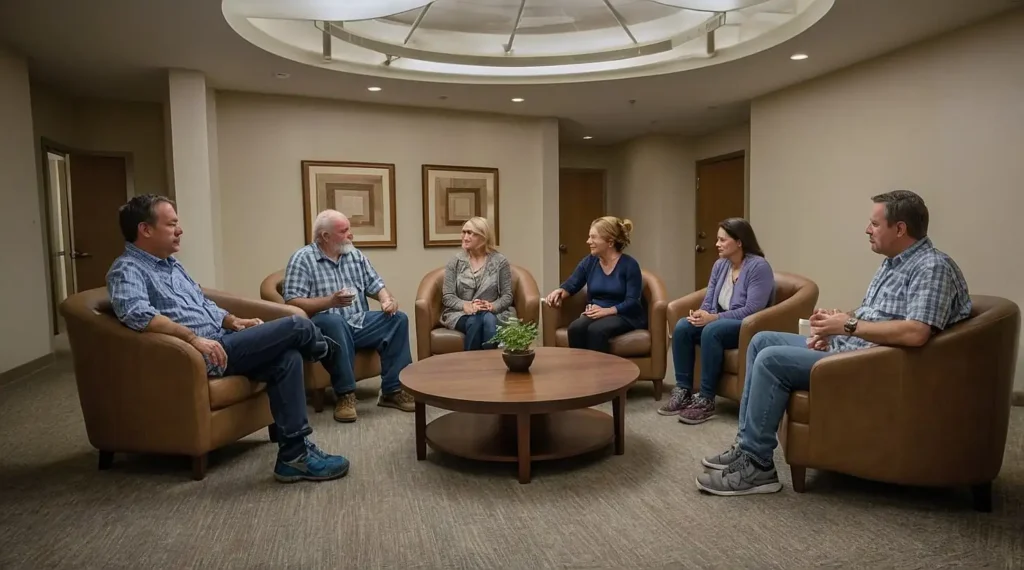
That is specifically relevant for IOP, where the client is being asked to sustain treatment engagement while handling more day-to-day duty. A weak system can lose people at that point. A coherent one gives them a better shot at remaining involved.
What this suggests for someone picking treatment
If a client or family is examining choices, it helps to believe beyond the first admission. Detox is essential for some individuals, but it is only one portion of a bigger healing procedure. The quality of the next action matters simply as much as the very first one.
A useful way to think of the sequence is basic:
- detox addresses instant withdrawal and stabilization
- residential treatment might be suggested when more structure is needed after detox
- intensive outpatient programming can supply substantial treatment assistance with more independence
- outpatient care can extend healing work over time
- peer support can strengthen connection and accountability along the way
That series will not look similar for every person, and it should not. The value lies in having genuine choices within one continuum.
When a center uses clinically monitored detox, describes a common 5 to 10 day withdrawal duration, provides support such as essential indication tracking, medications, hydration, nutrition, and psychological care, and then links clients to more treatment choices like property care or intensive outpatient programs, it is treating dependency as a process rather than a single event.
That is the heart of the connection. Drug detox helps people survive the instant storm. Extensive outpatient programming helps them begin constructing a life that can hold after the storm has passed. One is not a replacement for the other. They work best when they are connected, attentively timed, and supported by a treatment system developed for continuity.